• Log In
  • Members
    • Announcements
    • Directory
    • Events
    • Seminar Series
    • Academics
    • Facilities & Instruments
    • Outreach Opportunities
  • Visiting Researchers
    • People
    • Events
    • Seminar Series
    • Meetings
    • Contact Info
  • Prospective Members
    • Research Areas
      • Exoplanet & Brown Dwarf Surveys
      • Instrumentation
      • Life Beyond Earth & Astrobiology
      • Orbital Dynamics
      • Our Solar System
      • Planet-forming & Debris Disks
      • Planetary Atmospheres & Interiors
      • Planets around Evolved Stars & Stellar Remnants
      • Star & Planet Formation
      • Stellar Characterization & Variability
      • Statistical Methodology & Data Analysis
    • People
    • Facilities & Instruments
    • Events
    • Seminar Series
    • Academics
    • Opportunities
  • Community
    • Research Updates
    • Press Coverage
    • More News
    • Social Media
    • Outreach Program
    • Awards & Honors
    • About CEHW
    • Support CEHW
  • ARC
  • CPEST
  • CSRP
  • PSETI
  • PSGC
  • PSSC
Exoplanets
  • Research
    • Research Areas
      • Exoplanet & Brown Dwarf Surveys
      • Instrumentation
      • Life Beyond Earth & Astrobiology
      • Orbital Dynamics
      • Our Solar System
      • Planet-forming & Debris Disks
      • Planetary Atmospheres & Interiors
      • Planets around Evolved Stars & Stellar Remnants
      • Star & Planet Formation
      • Stellar Characterization & Variability
      • Statistical Methodology & Data Analysis
    • Facilities & Instruments
    • Publications
    • Visitors
    • Opportunities
  • People
    • Directory
    • Awards
    • Alumnae & Alumni
  • Events
    • Seminar Series
    • Meetings
    • Outreach
  • Education
    • Undergraduate
    • Graduate
  • About CEHW
    • Contact Info
    • Charter
    • Visitors
    • Press Coverage
    • Awards
    • Support CEHW
    • Poster
Select Page
NASA’s Newest Planet Tracker Finds a Sky-high Perch

NASA’s Newest Planet Tracker Finds a Sky-high Perch

by Eric Ford | Jan 12, 2020 | Exoplanet & Brown Dwarf Surveys, Instrumentation, Press Coverage

A new instrument funded by NASA and the National Science Foundation called NEID (pronounced “NOO-id”; sounds like “fluid”) will help scientists measure the masses of planets outside our solar system – exoplanets – by observing the...
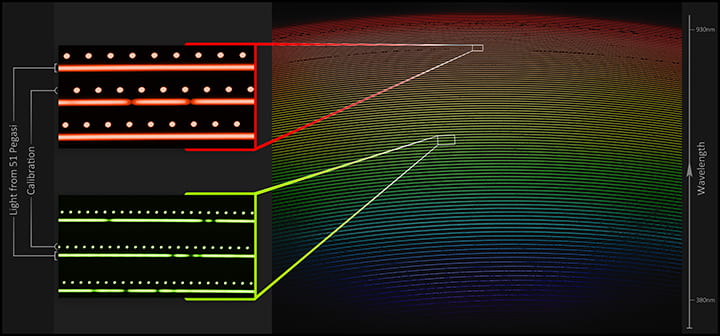
NEID Spectrograph Sees First Light

NEID Spectrograph Sees First Light

by Eric Ford | Jan 10, 2020 | Exoplanet & Brown Dwarf Surveys, Featured, Instrumentation, News, Press Coverage

The exoplanet-hunting instrument NEID, designed and built at Penn State, has passed an important milestone on the road to discovering Earth-mass planets beyond our solar system. The new instrument, an extreme precision radial velocity spectrometer, has been installed...

Intelligent Ways to Search for Extraterrestrials

by Eric Ford | Oct 3, 2019 | Press Coverage

A story in the New Yorker highlights CHEW Professor Jason Wright’s contributions to the Search for Extraterrestrials.
CEHW Professor Wright honored with 2019 Drake Award

CEHW Professor Wright honored with 2019 Drake Award

by Eric Ford | Mar 27, 2019 | Awards & Honors, Press Coverage

CEHW Professor Jason Wright has been named the recipient of the 2019 Drake Award by the SETI Institute. Read full story at Penn State News.
Penn State Extraterrestrial Intelligence (PSETI) Center

Penn State Extraterrestrial Intelligence (PSETI) Center

by Eric Ford | Mar 1, 2019 | Announcements, Life Beyond Earth & Astrobiology, Press Coverage

A new Penn State Extraterrestrial Intelligence (PSETI) Center that will compliment the Center for Exoplanets & Habitable Worlds was profiled in Science. Penn State recently announced two alumni gifts to fund the PSETI Center. These gifts will establish the John...
“The Next Step In The Search For Aliens Is A Huge Telescope And A Ton Of Math” – FiveThirtyEight.com

“The Next Step In The Search For Aliens Is A Huge Telescope And A Ton Of Math” – FiveThirtyEight.com

by Eric Ford | Jul 21, 2017 | Press Coverage

FiveThirtyEight.com recently reported on two broad approaches to learning about potentially habitable exoplanets and perhaps even signs of life in an article titled, “The Next Step In The Search For Aliens Is A Huge Telescope And A Ton Of Math”.
« Older Entries
Next Entries »

Research Areas

  • Exoplanet & Brown Dwarf Surveys
  • Instrumentation
  • Life Beyond Earth & Astrobiology
  • Orbital Dynamics
  • Our Solar System
  • Planet-forming & Debris Disks
  • Planetary Atmospheres & Interiors
  • Planets around Evolved Stars & Stellar Remnants
  • Star & Planet Formation
  • Stellar Characterization & Variability
  • Statistical Methodology & Data Analysis

RSS NEID Blog

    RSS Habitable Zone Planet Finder Blog

      Copyright © 2014  – The Pennsylvania State University
      Privacy and Legal Statements  – Contact the Web Site Administrator

      • Penn State
      • Eberly College of Science
      • Astronomy & Astrophysics
      • College of Earth & Mineral Science
      • Geosciences
      • RSS