by Arvind Gupta | Aug 20, 2021 | Collaborations, Instrumentation, News, Press Coverage, Research
Suvrath Mahadevan and Sam Sholtis The NEID spectrometer, a new tool for the discovery of planets outside of our solar system, has now started its scientific mission at the WIYN 3.5m telescope at Kitt Peak National Observatory, Arizona. “We are proud that NEID is...

by Arvind Gupta | Jun 2, 2021 | Awards & Honors, Collaborations, Exoplanet & Brown Dwarf Surveys, Instrumentation, News, Research
The NEID instrument team, led by Penn State Professor of Astronomy and Astrophysics Suvrath Mahadevan, was recognized by NASA with the Group Achievement Award, which is presented to groups who have distinguished themselves through outstanding contributions to NASA’s...
by Eric Ford | Aug 5, 2020 | Exoplanet & Brown Dwarf Surveys, Featured, Instrumentation, Planetary Atmospheres & Interiors
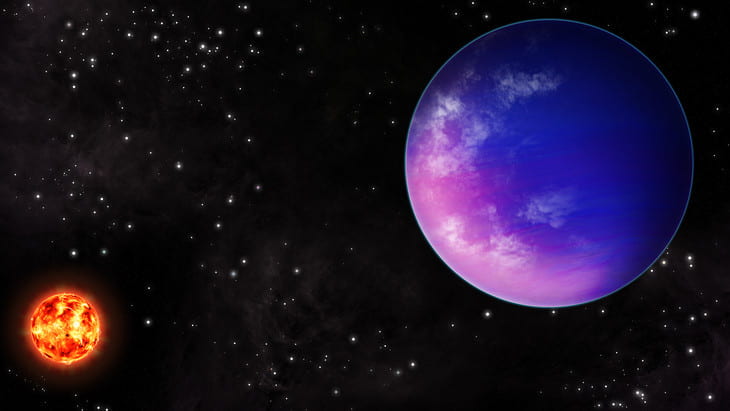
UNIVERSITY PARK, Pa. — The detailed characterization of a young planet slightly smaller than Neptune provides insight into how such planets form and evolve. Astronomers characterized the planet’s mass, radius, and the tilt of its orbit using the Habitable-zone Planet...

by Eric Ford | Jan 12, 2020 | Exoplanet & Brown Dwarf Surveys, Instrumentation, Press Coverage
A new instrument funded by NASA and the National Science Foundation called NEID (pronounced “NOO-id”; sounds like “fluid”) will help scientists measure the masses of planets outside our solar system – exoplanets – by observing the...
by Eric Ford | Jan 10, 2020 | Exoplanet & Brown Dwarf Surveys, Featured, Instrumentation, News, Press Coverage
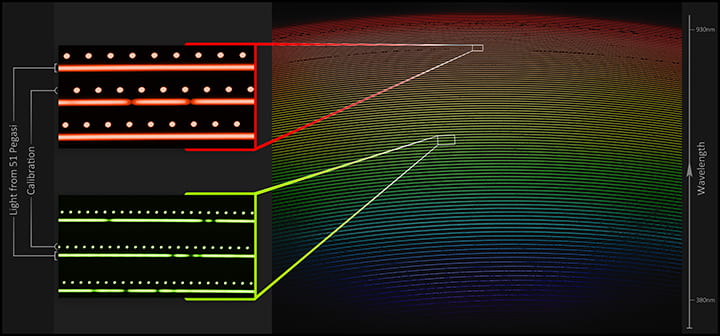
The exoplanet-hunting instrument NEID, designed and built at Penn State, has passed an important milestone on the road to discovering Earth-mass planets beyond our solar system. The new instrument, an extreme precision radial velocity spectrometer, has been installed...

by Suvrath Mahadevan | Mar 8, 2019 | Instrumentation, Life Beyond Earth & Astrobiology, News, Publications, Star & Planet Formation
A new astronomical spectrograph built by a Penn State-led team of scientists provides the highest precision measurements to date of infrared signals from nearby stars, allowing astronomers to detect planets capable of having liquid water on their surfaces that orbit...

